Kavyo
A validation dashboard that asks whether grocery savings survive the drive. It won the Future Tech Social Service Award.
01 / The question
Kavyo is a grocery decision product for Canadian households. A lower price only matters if the trip to get it is worth it, so before building the app the team needed evidence: does the cheaper store still win after distance, time and fuel are counted?
02 / What I built
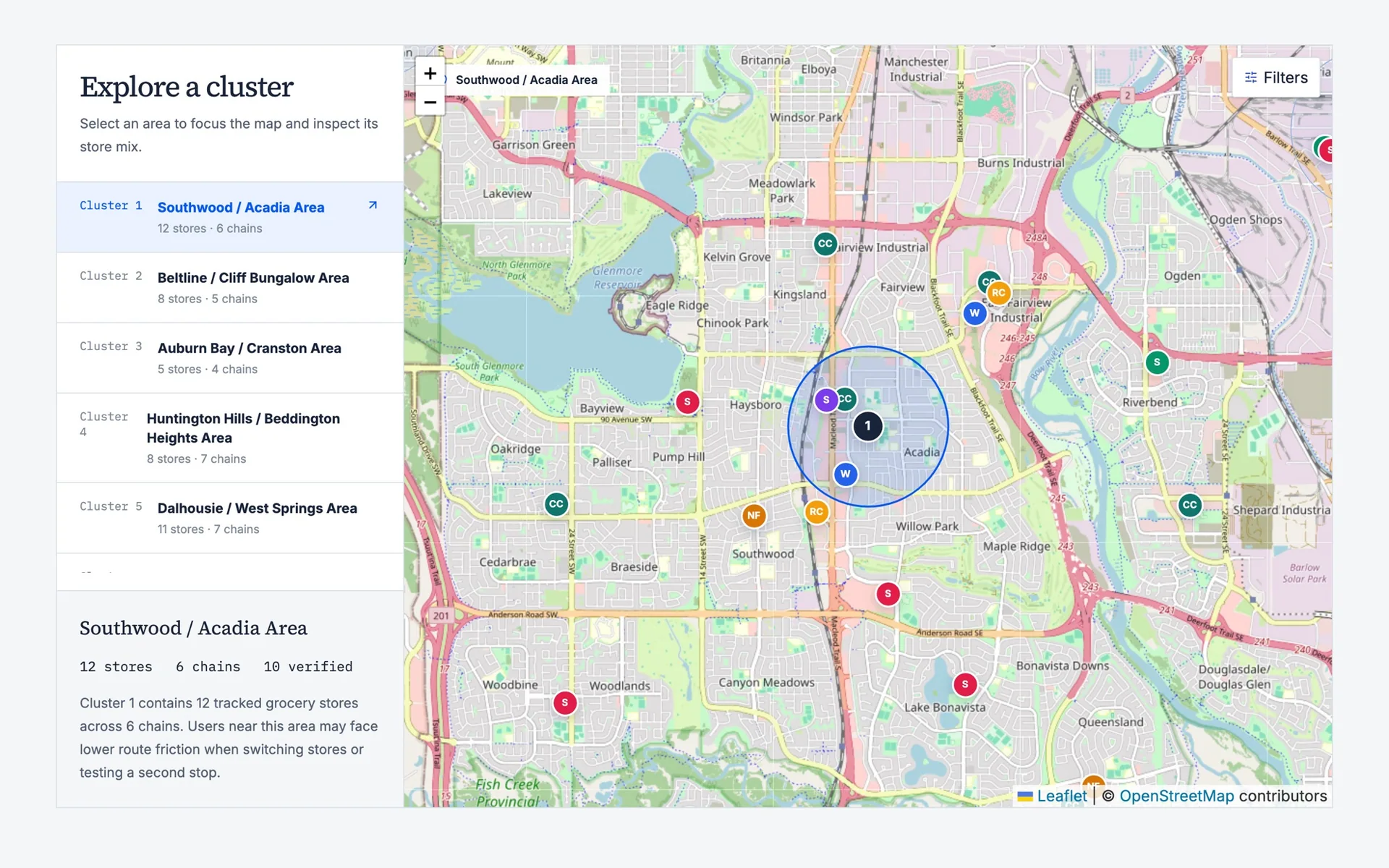
A research dashboard with connected evidence layers: a map of 107 tracked Calgary grocery stores and the 13 clusters where several chains sit close together, a route lab that subtracts travel time and energy cost from basket savings, a price view that compares a common basket across stores, and field research from 72 in-store intercepts.
03 / How it decides
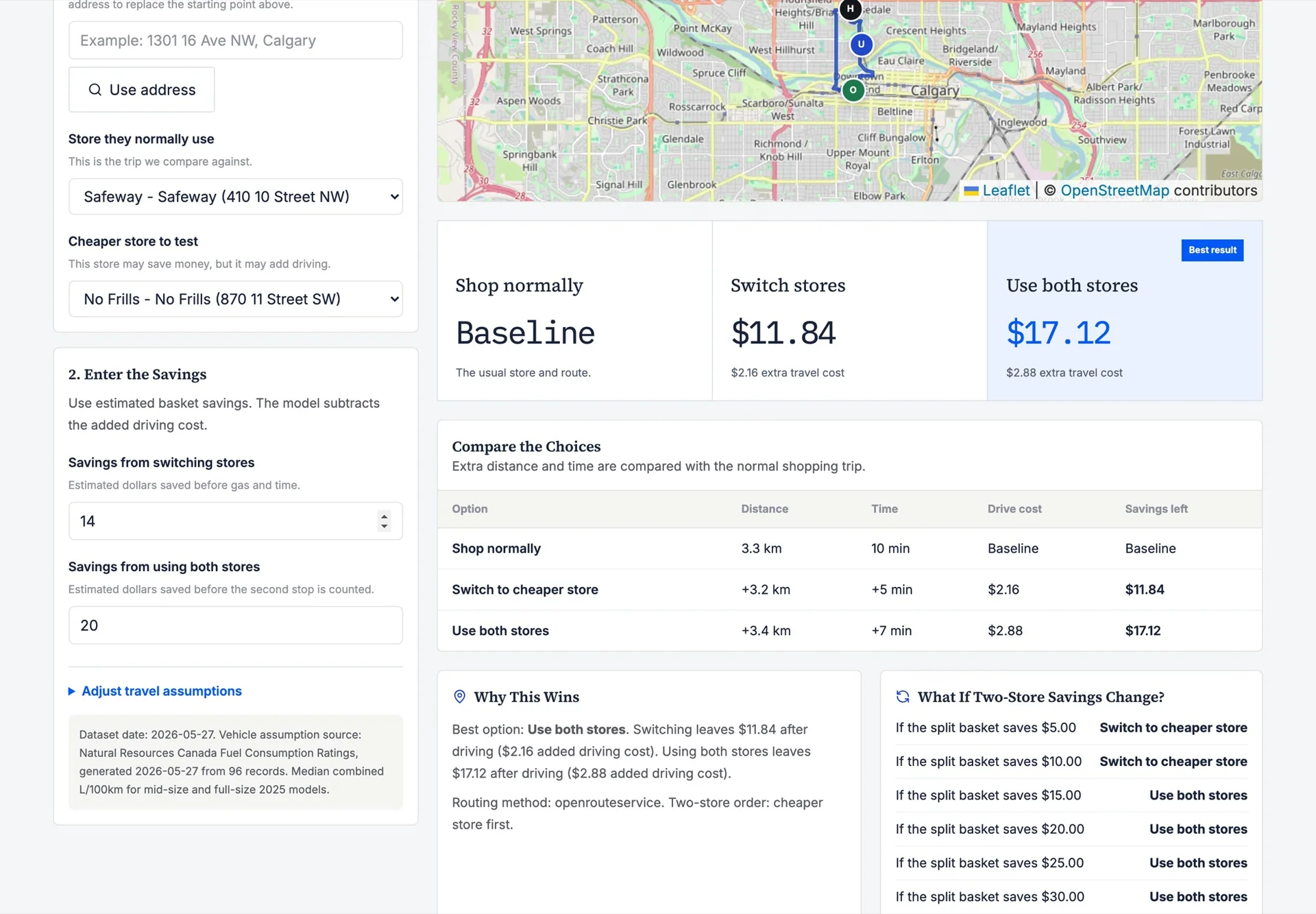
The route lab compares three choices for a shopper, which are to stay, switch stores or use both, and shows the arithmetic: basket savings, minus extra driving, equals what is left. Nothing hides behind a score. Where the evidence is thin the dashboard says so. Only 7 of 14 basket items compare across every store, and the price data is a single snapshot.
04 / What it found
The findings page puts it in its own words: a promising case, with clear limits. The geography and route model support further testing, while repeatable prices and real shopper behaviour remain open questions. This is a validation tool, not the production grocery app.